

Faculty Development Program
Creating the Heros of Tomorrow
Faculty Development Program Report on a case study workshop for the class and international publication:
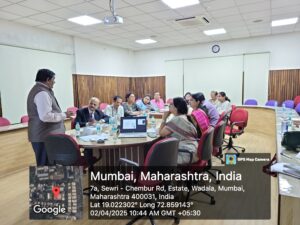
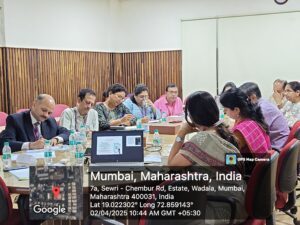
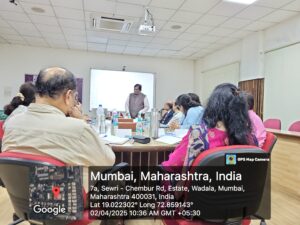
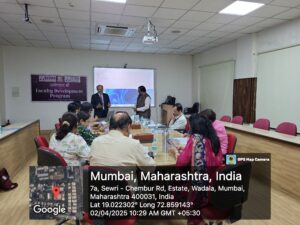
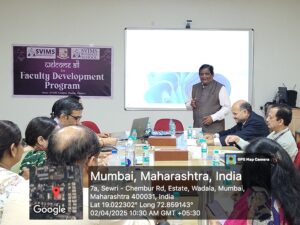
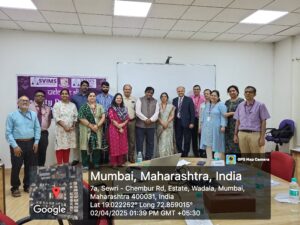
Faculty Development Program Report on a case study workshop for the class and international publication:
The objective of faculty development program (FDP) was to motivate faculties to write case study. Topic of FDP was a case study workshop for the class and international publication. Dr. Dhanashree Potey, Associate Professor, SVIMS, taken initiative to arrange this FDP. Dr. Purshottam Patil, Director SVIMS Business School given brief address to Prof. Dr. Mohan Lal Agarwal and faculties present at the conference room. Prof. Dr. Mohan Lal Agarwal, Dy. Academic Dean, University of West London, UAE Campus, conducted this FDP on 02/04/2025 at the conference room. Dr. Dhanashree Potey, Associate Professor-Marketing, introduced Prof. Dr. Mohan Lal Agarwal with brief profile. Faculties of Sir M Visvesvaraya Institute of Management Studies and Research, SVIMS Business School and NKES Degree college attended FDP.
Prof. Dr. Mohan Lal Agarwal asked faculties about what challenges they are facing in the classroom. Some faculties have asked about how to engage students in the class more effectively. Prof. Dr. Mohan Lal Agarwal explained about the concept of VARK to engage students more effectively. VARK means visualization, Auditory, Reading and Kinesthetic(action).
Prof. Dr. Mohan Lal Agarwal then explained about the stimulus case. Stimulus case should be of 3 pages. It is a brief story on a real life business or management situation. Stimulus case should not be more than 6 months old. Features of stimulus cases are 1. Recent, 2. Easily relatable, 3. Subject relevant, 4. Easy to convert in a decision dilemma, 5. Takes as much research as learners feel the need, 6. Rich in imagination and insights. Faculties can publish brief cases in Harvard Business Review Journals.
He elaborated on the following instant sources for stimulus cases: 1. Daily news story, 2. TV News story, 3. Google search, 4. Company websites, 5. YouTube, 6. Projects/Assignments, 7. Textbooks, and 8. Slice of life story. Then he discussed about seven types of Case research: 1. Exploratory, 2. Explanatory, 3. Descriptive, 4. Intrinsic, 5. Multiple case studies, 6. Instrumental case study and 7. Evaluation and design case study. He suggested following data sources in case research: 1. Primary sources- Interviews, observation, documents and records, 2. Secondary sources: News/Media, academic articles, government reports, books and films, 3. Archived records, and organizational records.
Prof. Dr. Mohan Lal Agarwal finally explained how to conduct a case research by adhering to 1. Review extant literature, 2. Define the research questions, 3. Select the case, 4. Decide the data collection approach, 5. Analyze the data, 6. Draw conclusions, 7. Validate the findings and 8. Write
Faculty development program ended with vote of thanks by Dr. Dhanashree Potey.